Monitoring a Sitecore JSS website with Sentry
Sentry.io
Sentry is a developer-first error tracking and performance monitoring platform that helps developers see what matters, solve quicker, and continuously learn about their applications.
It offers SDKs for 108 platforms including JavaScript(Browser/Node.js), React, .NET, Java, and Next.js.
Sentry.io is open-source. Refer https://github.com/getsentry/sentry
Offers integration with popular platforms like Slack, Teams, etc. for monitoring.
Integrating Sitecore JSS with Sentry
Sentry does not have a specific integration for Sitecore JSS. However, we can integrate a Sitecore JSS application with the front-end technology we choose, which could be Angular/React/.NET Core/Next.js etc. In this example, I will be integrating a Sitecore JSS with Next.js solution with Sentry.

The SDK can be installed by the installation wizard which can be run by the below CLI command:
npx @sentry/wizard@latest -i nextjsThe wizard will prompt you to log in to Sentry.
It will install the SDK and create the config files needed for you.
It will also add an example page to raise an error.
This setup will automatically catch the errors in your application.
For adding custom information to the logs, that are specific to Sitecore can be made as below:
Import
Sentryfrom@sentry/nextjs.import * as Sentry from "@sentry/nextjs";Add the below lines to your [[...path]].tsx file, exactly before you return the component defintion.
Sentry.setContext("jss-sitecore-page", {
  isEditing: isEditing,
  renderingType: layoutData?.sitecore?.context?.renderingType,
  dataBaseName: layoutData?.sitecore?.route?.databaseName,
  site: layoutData?.sitecore?.context?.site,
  language: layoutData?.sitecore?.context?.language,
  path: layoutData?.sitecore?.route?.name,
});
// Add the above lines before the return statement
return (
  <ComponentPropsContext value={componentProps}>
    <SitecoreContext
      componentFactory={isEditing ? editingComponentFactory : componentFactory}
      layoutData={layoutData}
    >
      {/*
          Sitecore Pages supports component rendering to avoid refreshing the entire page during component editing.
          If you are using Experience Editor only, this logic can be removed, Layout can be left.
        */}
      {isComponentRendering ? (
        <EditingComponentPlaceholder rendering={layoutData.sitecore.route} />
      ) : (
        <Layout layoutData={layoutData} />
      )}
    </SitecoreContext>
  </ComponentPropsContext>
);
In your middleware, or in this example the normal-mode plugin. Add a try/catch block in the exec method. And, add the below lines:
try {
  const path = extractPath(context.params);
  const sitecoreContext = props?.layoutData?.sitecore?.context;
  Sentry.addBreadcrumb({
    category: "site_name",
    message: sitecoreContext?.site?.name,
  });
  Sentry.configureScope((scope) => {
    scope.setTag("page_mode", "normal");
    scope.setTag(
      "database",
      props?.layoutData?.sitecore?.route?.databaseName,
    );
    scope.setTag("site", sitecoreContext?.site?.name);
    scope.setTag("language", sitecoreContext?.language);
    scope.setExtra("item_path", path);
    scope.setExtra("item_id", props?.layoutData?.sitecore?.route?.itemId);
  });

  // Rest of your code here
} catch (err) {
  Sentry.configureScope((scope) => {
    scope.setTag("page_mode", "normal");
    scope.setTag(
      "database",
      props?.layoutData?.sitecore?.route?.databaseName,
    );
    scope.setTag("site", props?.layoutData?.sitecore?.context?.site?.name);
    scope.setTag("language", props?.layoutData?.sitecore?.context?.language);
    scope.setExtra("item_path", extractPath(context?.params));
    scope.setExtra("item_id", props?.layoutData?.sitecore?.route?.itemId);
  });
  Sentry.captureException(err);
  return props;
}
I have also pushed the source code to my github repository: Sitecore.JSS.NextJs.Sentry
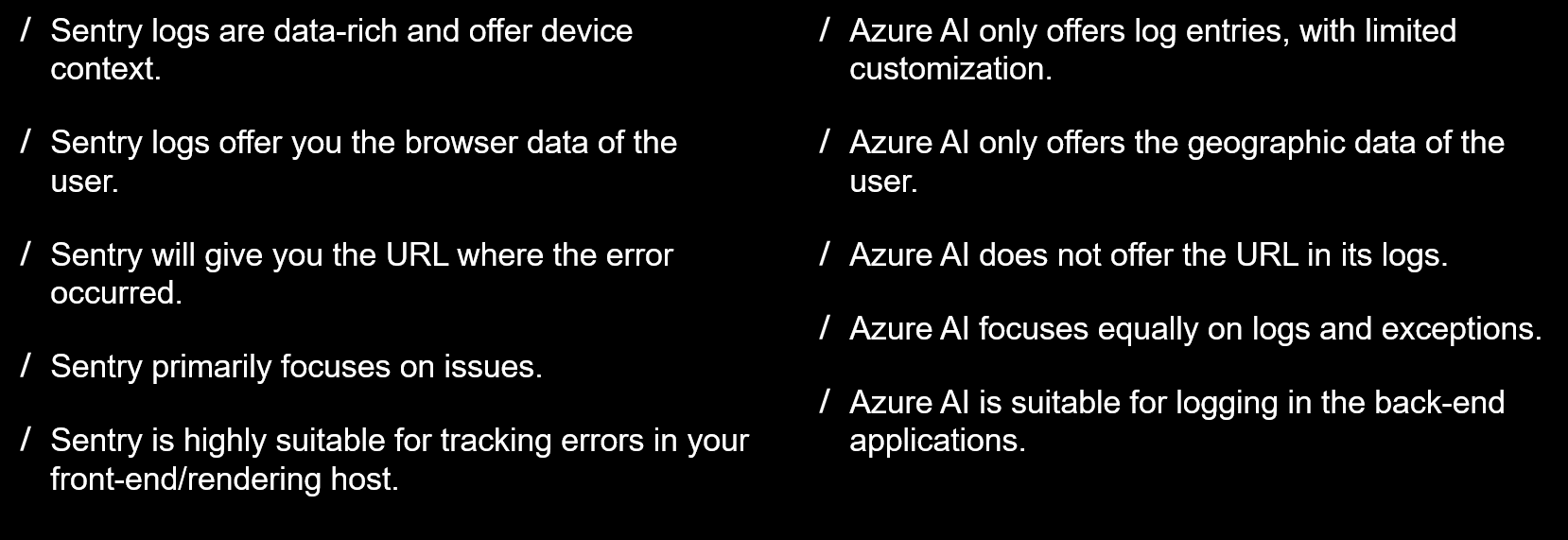
Sentry vs Azure Application Insights
References
Sentry Next.js documentation- https://docs.sentry.io/platforms/javascript/guides/nextjs
My example Github Repository: Sitecore.JSS.NextJs.Sentry
SUG France - Demo - https://youtu.be/zYrzNLbY0Po?t=7575&feature=shared